
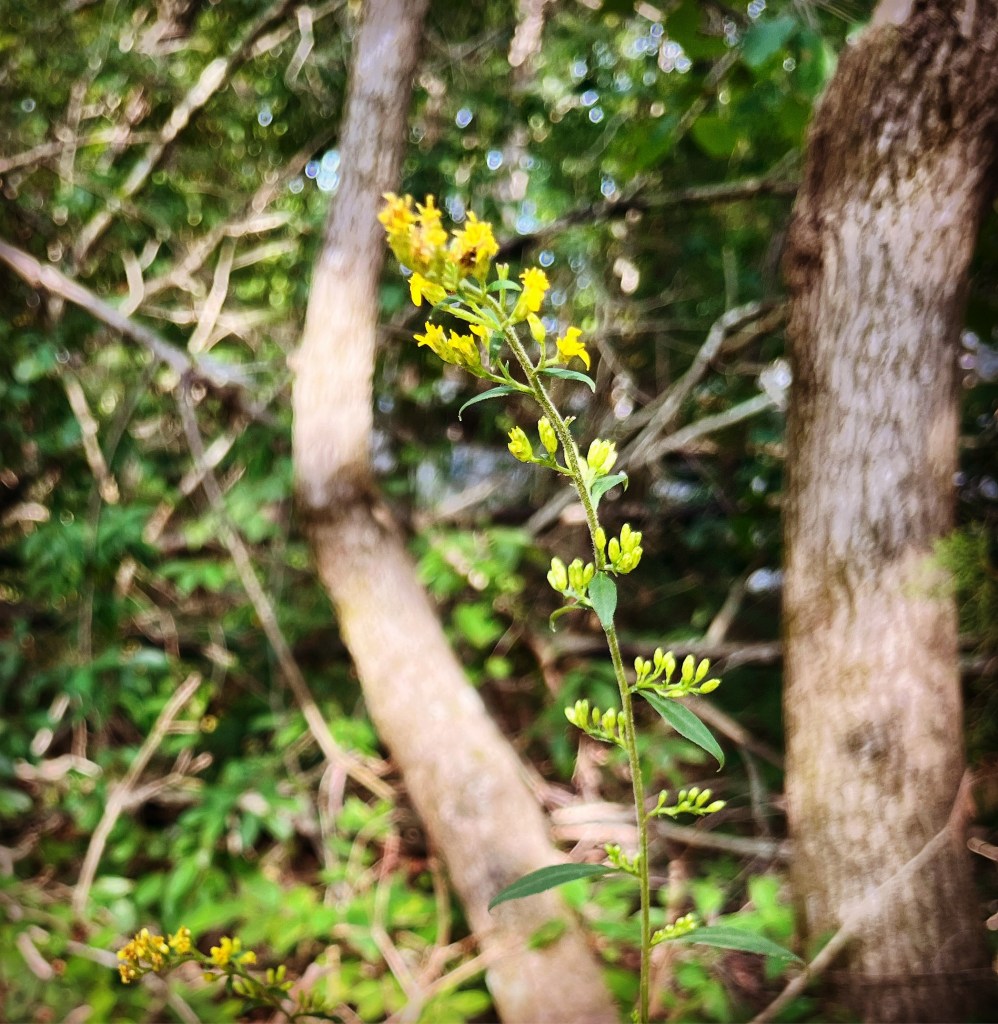
💚🌼🌱💛 Goldenrods are a group of 100+ species of asters native to North America. They bloom from June through October, providing sustenance and shelter for pollinating insects long after summer flowers have passed.
💚After the Boston Tea Party, tea made from goldenrod became known as “liberty tea.” It was the first and for a while, the only tea colonists would drink while protesting against the British taxation.
🌼In 1918 a national publication, the Independent, published a survey on the American sentiments for a national flower. The survey found that Americans were undecided between columbine, clover, daisy, and goldenrod. In 1942, goldenrod was still running for the title of National flower, but had developed the reputation of causing hay fever. While its pollen was then believed to be an aeroallergen, scientists have since discovered this is actually not the case. Goldenrod’s pollen is not airborne .. it blossoms at the same time as ragweed, the true instigator of hay fever. Despite the clarification, the rose received the coveted honor of National flower in 1986.
🌱Goldenrod is a sign of good luck and fortune in many cultures. The stem of the plant was historically used as a divining rod. Some believe whenever goldenrod grows near a home, its occupants will have good fortune.
💛The most fascinating use for Goldenrod came from Thomas Edison, who cultivated a 12 ft tall plant that yielded 12% rubber content in each plant. Henry Ford gave Edison a Model T with tires made from Goldenrod but Edison unfortunately died before he could bring this project into commercial production. During World War II there was extensive process development conducted on Goldenrod but they were not as successful as Edison, as they could only cultivate leaves with a rubber content of 7 percent. 💚🌼🌱💛

 I Love Wildflowers